







Inflammation plays an important role in body defense against pathogen invasion and tissue injury, and is closely linked to serious diseases. For example, neuroinflammation is reportedly involved in nearly all neurodegenerative diseases. Our group focuses on comprehending the molecular modulation of inflammation-associated signaling pathwaysparticularly mediated by transmembrane proteins. We aim to trace the dynamic conformational change of signal transducers by exploiting the biophysical approaches, untangle its relationship with the function of protein machinery in combination with complementary techniques provided by biochemistry and neuroscience. Subsequently, a major goal of ours is to determine the mechanisms of the signal propagation by vital receptors across the cell membrane and its involvement in neuroimmune crosstalk and neuroinflammation, and make contributions to structure-based drug design for specific targets.

Email:houyifei@fudan.edu.cn
Research Direction:Functional regulation of the receptors sensing neuroinflammation-related signals

Email:happyying0206@163.com
Research Direction:Technical support and lab management

Email:22111520008@m.fudan.edu.cn
Research Direction:Functional regulation of the receptors sensing neuroinflammation-related signals

Email:22211520051@m.fudan.edu.cn
Research Direction:Functional regulation of the receptors sensing neuroinflammation-related signals

Email:23111520035@m.fudan.edu.cn
Research Direction:Functional regulation of the receptors sensing neuroinflammation-related signals

Email:23211520062@m.fudan.edu.cn
Research Direction:Functional regulation of the receptors sensing neuroinflammation-related signals

Email:duyutaodr@163.com
Research Direction:Autoimmune Encephalitis and Seizures
 Lab Alumni
Email:19301050228@fudan.edu.cn
Research Direction:Functional regulation of the receptors sensing neuroinflammation-related signals

Email:20301050122@fudan.edu.cn
Research Direction:Functional regulation of the receptors sensing neuroinflammation-related signals

Email:20307110038@fudan.edu.cn
Research Direction:Functional regulation of the receptors sensing neuroinflammation-related signals

Email:23111210060@m.fudan.edu.cn
Research Direction:Glia cells and Neuroinflammation
Chen, C., Zhao, Y., Lian, Y., Hou, Y., Gong, L., Wu, T., Yang, Y., Zhu, J., Wang, X.#, Zhang, K.# & Ding, J.#. 2026. Fatty Acid Binding Protein 5 Mediates Astrocytic Pyroptosis and Neuroinflammation in Epilepsy via cGAS/STING Pathway, Advanced Science, e76377.
Zhang, K. 2024. Characterizing the Structures and Regulation of TRPV Channels Using Cryo-EM (Book Chapter), TRP-Mediated Signaling (CRC press), 17-34.
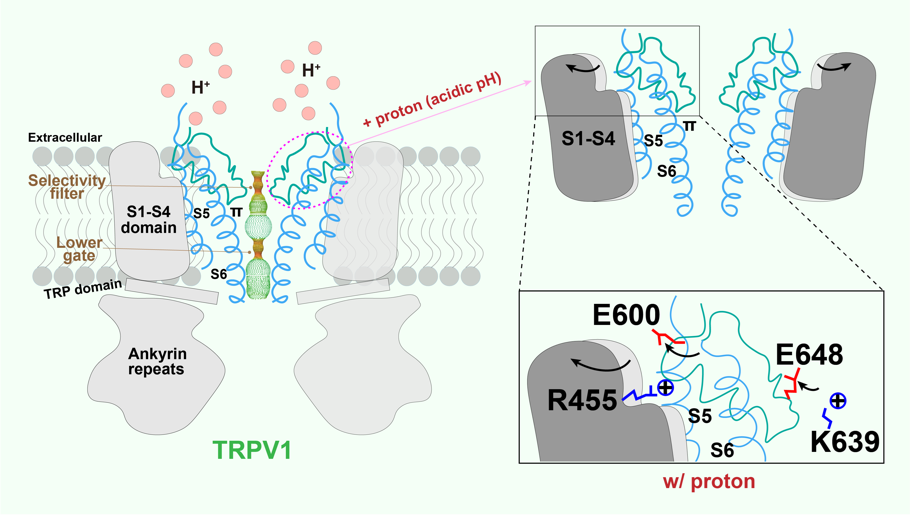
Zhang, K., Julius, D., and Cheng, Y. 2021. Structural snapshots of TRPV1 reveal mechanism of polymodal functionality, Cell, 184: 5138-5150 e12.
Zhang, K., Wu, H., Hoppe, N., Manglik, A., and Cheng, Y. 2022. Fusion protein strategies for cryo-EM study of G protein-coupled receptors, Nat Commun, 13: 4366.
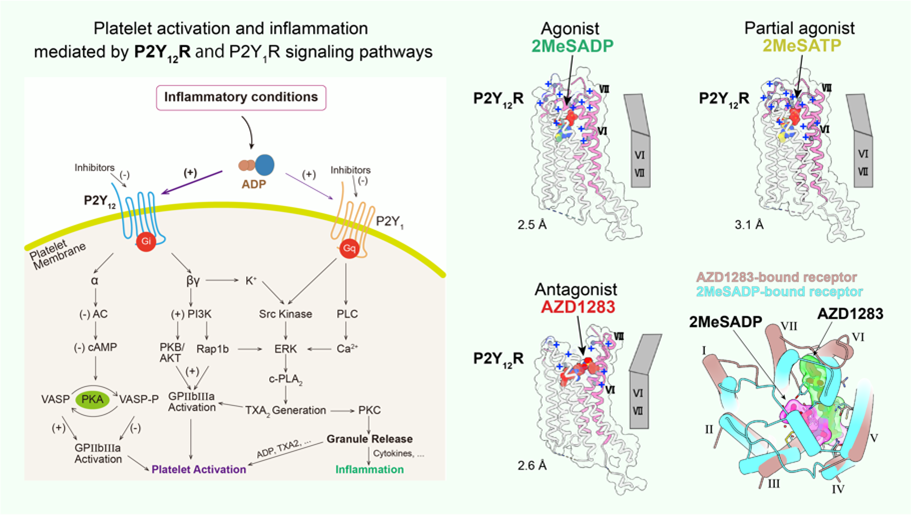
Zhang, K.*, Zhang, J.*, Gao, Z.G., Zhang, D., Zhu, L., Han, G.W., Moss, S.M., Paoletta, S., Kiselev, E., Lu, W., Fenalti, G., Zhang, W., Muller, C.E., Yang, H., Jiang, H., Cherezov, V., Katritch, V., Jacobson, K.A., Stevens, R.C., Wu, B., and Zhao, Q. 2014. Structure of the human P2Y12 receptor in complex with an antithrombotic drug, Nature, 509: 115-8. (*, co-first author)
Zhang, J.*, Zhang, K.*, Gao, Z.G., Paoletta, S., Zhang, D., Han, G.W., Li, T., Ma, L., Zhang, W., Muller, C.E., Yang, H., Jiang, H., Cherezov, V., Katritch, V., Jacobson, K.A., Stevens, R.C., Wu, B., and Zhao, Q. 2014. Agonist-bound structure of the human P2Y12 receptor, Nature, 509: 119-22. (*, co-first author)
Zhang, K., Julius, D., and Cheng, Y. 2022. A step-by-step protocol for capturing conformational snapshots of ligand gated ion channels by single-particle cryo-EM, STAR Protoc, 3: 101732.
Zhou, X.X., Bracken, C.J., Zhang, K., Zhou, J., Mou, Y., Wang, L., Cheng, Y., Leung, K.K., and Wells, J.A. 2020. Targeting Phosphotyrosine in Native Proteins with Conditional, Bispecific Antibody Traps, J Am Chem Soc, 142: 17703-17713.
Schoof, M., Faust, B., Saunders, R.A., Sangwan, S., Rezelj, V., Hoppe, N., Boone, M., Billesbolle, C.B., Puchades, C., Azumaya, C.M., Kratochvil, H.T., Zimanyi, M., Deshpande, I., Liang, J., Dickinson, S., Nguyen, H.C., Chio, C.M., Merz, G.E., Thompson, M.C., Diwanji, D., Schaefer, K., Anand, A.A., Dobzinski, N., Zha, B.S., Simoneau, C.R., Leon, K., White, K.M., Chio, U.S., Gupta, M., Jin, M., Li, F., Liu, Y., Zhang, K., Bulkley, D., Sun, M., Smith, A.M., Rizo, A.N., Moss, F., Brilot, A.F., Pourmal, S., Trenker, R., Pospiech, T., Gupta, S., Barsi-Rhyne, B., Belyy, V., Barile-Hill, A.W., Nock, S., Liu, Y., Krogan, N.J., Ralston, C.Y., Swaney, D.L., Garcia-Sastre, A., Ott, M., Vignuzzi, M., Consortium, Q.S.B., Walter, P., and Manglik, A. 2020. An ultrapotent synthetic nanobody neutralizes SARS-CoV-2 by stabilizing inactive Spike, Science, 370: 1473-1479.
Faust, B., Billesbolle, C.B., Suomivuori, C.M., Singh, I., Zhang, K., Hoppe, N., Pinto, A.F.M., Diedrich, J.K., Muftuoglu, Y., Szkudlinski, M.W., Saghatelian, A., Dror, R.O., Cheng, Y., and Manglik, A. 2022. Autoantibody mimicry of hormone action at the thyrotropin receptor, Nature, 609: 846-853.
Zhang, D., Gao, Z.G., Zhang, K., Kiselev, E., Crane, S., Wang, J., Paoletta, S., Yi, C., Ma, L., Zhang, W., Han, G.W., Liu, H., Cherezov, V., Katritch, V., Jiang, H., Stevens, R.C., Jacobson, K.A., Zhao, Q., and Wu, B. 2015. Two disparate ligand-binding sites in the human P2Y1 receptor, Nature, 520: 317-21.


 Address: Floor 2, Building B, Medical Research Building, 131 Dong
 Postcode: 200032
 Email: khzhang@fudan.edu.cn

 Address:No.138, medical college road
  Postcode:200032
  Tel/Fax:021-54237056
 Emial:itbr@fudan.edu.cn
220 Handan Rd., Shanghai(200433) Operator:+86-21-65642222 © 2019 FUDAN UNIVERSITY.
