

 李保宾
青年研究员
李保宾
青年研究员
 神经信号转导结构生物学
李保宾,脑科学转化研究院青年研究员,博士生导师。先后入选国家级及上海市级高层次青年人才计划,并担任科技部“2030脑科学与类脑研究”重大项目(青年)负责人。2014年于清华大学生命科学学院获博士学位;2014年至2020年,先后在威斯康星大学麦迪逊分校及加州大学伯克利分校从事博士后研究工作;2021年至2022年,于加州大学伯克利分校担任助理项目科学家。2022年5月加入复旦大学脑科学转化研究院,主要研究方向为:解析参与学习、记忆等认知过程的神经元环路中关键蛋白质机器的结构基础、动态变化与调控机制,从而揭示认知障碍的分子机理;同时,探究神经退行性疾病等脑疾病中关键蛋白质机器的结构与功能失调,阐明其致病机制,并以此为基础开展药物的筛选与开发。学术成果以通讯作者或第一作者(含共同)身份发表在Nature、Nature Structural & Molecular Biology(两篇)、Nature Communications(三篇)、Nature Chemical Biology、PNAS、Cell Discovery等国际高水平期刊发表多篇研究论文。
离子通道和转运蛋白在神经元的电信号(动作电位)产生以及神经元之间的通讯(化学神经递质)中发挥着重要的作用。动作电位可以通过不同的刺激例如温度、压力、pH、氧气、光和其他信号分子调节离子通道活性而产生。动作电位引起神经递质释放到突触间隙中,结合并活化突触后膜表面受体,进一步引起突触后膜膜电位变化,实现神经信号的转导。课题组的研究兴趣在于理解神经电信号传导中离子通道和神经递质转运蛋白的分子机制和工作机理。利用结构生物学、电生理学和生物化学等手段揭示离子通道或神经递质转运蛋白底物结合、离子运输、门控机制以及其他小分子活性调节原理。

邮箱:24111530007@m.fudan.edu.cn
研究方向:离子通道门控机制和神经递质传递机制。
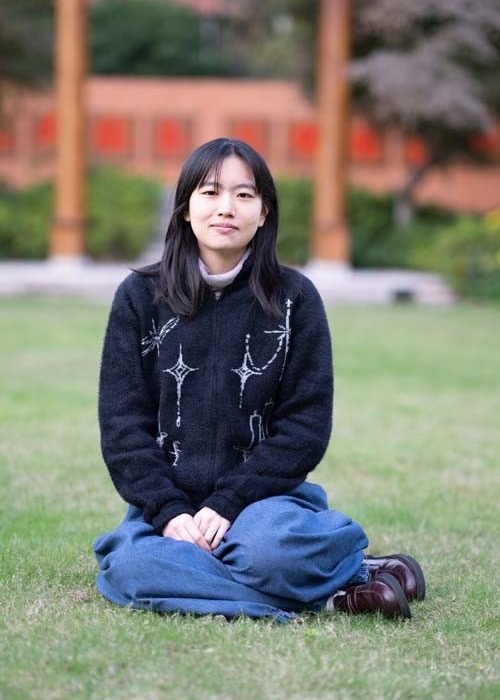
邮箱:indolsweetener@163.com
研究方向:离子通道门控及其在神经病理学中的作用。
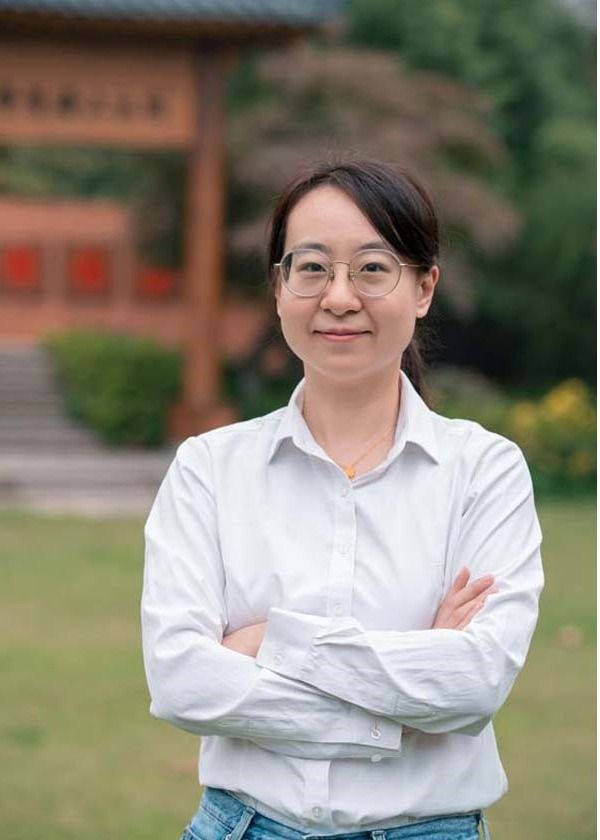
邮箱:zhang_ran@fudan.edu.cn
研究方向:离子通道门控机制和神经递质传递机制。

邮箱:
研究方向:离子通道的门控机制

邮箱:
研究方向:神经递质传递机制。
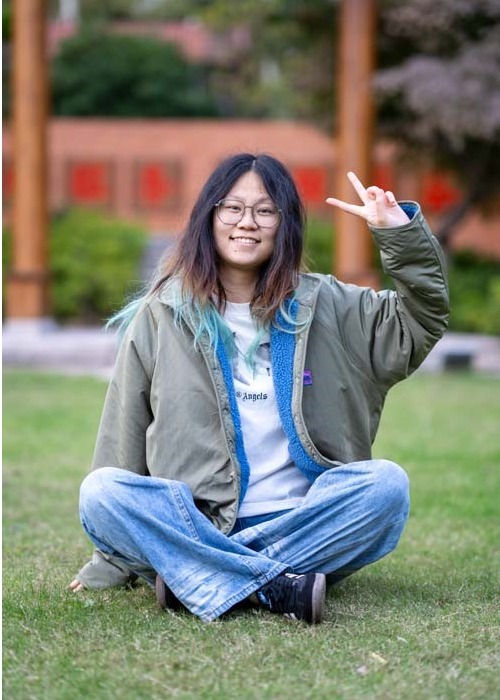
邮箱:
研究方向:神经递质传递机制。

邮箱:lfenglian@yeah.net
研究方向:离子通道门控机制
前人员Xiangyun Fang#, Haichao Jin#, Jin Wang*, Ran Zhang*, Baobin Li* (2025). Structural Insights into the Gating Mechanism of the Two-Pore Domain Potassium Channel THIK1. Nat Struct Mol Biol (2025).
Qixian He#, Ran Zhang#, Sandrine Tury#, Valérie Courgnaud, Fenglian Liu, Jean-luc Battini*, Baobin Li* & Qingfeng Chen* (2025). Structural basis of phosphate export by human XPR1. Nat Commun 16, 683 (2025). https://doi.org/10.1038/s41467-025-55995-8.
Ruizhu Chen#, Ran Zhang#, Lu Li#, Bozhan Wang#, Zhiwei Gao, Fenglian Liu, Yan Chen, Yutao Tian *, Baobin Li*, and Qingfeng Chen* (2024). Structure basis for sugar specificity of gustatory receptors in insects. Cell Discovery. https://doi.org/10.1038/s41421-024-00716-6.
Li, B.#, Hoel, C. M.#, & Brohawn, S. G.* (2021). Structures of Tweety Homolog Proteins TTYH2 and TTYH3 reveal a Ca2+-dependent switch from intra- to inter-membrane dimerization. Nature Communications. https://doi.org/10.1038/s41467-021-27283-8
Rietmeijer, R. A.#, Sorum, B.#, Li, B., & Brohawn, S. G.* (2021). Physical basis for distinct basal and mechanically gated activity of the human K+ channel TRAAK. Neuron. https://doi.org/10.1016/j.neuron.2021.07.009
Li, B.#, Rietmeijer, R. A.#, & Brohawn, S. G.* (2020). Structural basis for pH gating of the two-pore domain K+ channel TASK2. Nature. https://doi.org/10.1038/s41586-020-2770-2
Hu, C. W.#, Worth, M.#, Fan, D.#, Li, B.#, Li, H.#, Lu, L., Zhong, X., Lin, Z., Wei, L., Ge, Y., Li, L., & Jiang, J.* (2017). Electrophilic probes for deciphering substrate recognition by o-glcnac transferase. Nature Chemical Biology. https://doi.org/10.1038/nchembio.2494
Li, B.#, Li, H.#, Hu, C. W., & Jiang, J.* (2017). Structural insights into the substrate binding adaptability and specificity of human O-GlcNAcase. Nature Communications. https://doi.org/10.1038/s41467-017-00865-1
Li, B., Li, H., Lu, L., & Jiang, J.* (2017). Structures of human O-GlcNAcase and its complexes reveal a new substrate recognition mode. Nature Structural and Molecular Biology. https://doi.org/10.1038/nsmb.3390
Li, B.#, Wang, Q.#, Pan, X., De Castro, I. F., Sun, Y., Guo, Y., Tao, X., Risco, C., Sui, S. F., & Lou, Z.* (2013). Bunyamwera virus possesses a distinct nucleocapsid protein to facilitate genome encapsidation. Proceedings of the National Academy of Sciences of the United States of America. https://doi.org/10.1073/pnas.1222552110


 地址: 上海市徐汇区东安路131号二号医学科研楼B座B2-006
 邮编: 200032
 邮箱: libaobin@fudan.edu.cn

 地址:上海市徐汇区医学院路138号
  邮编:200032
  电话/传真:021-54237056
  邮箱:itbr@fudan.edu.cn
 地址:上海市徐汇区医学院路138号,邮编:200032,电话:54237056,复旦大学脑科学转化研究院 版权所有